
Why Africa is made for a road trip
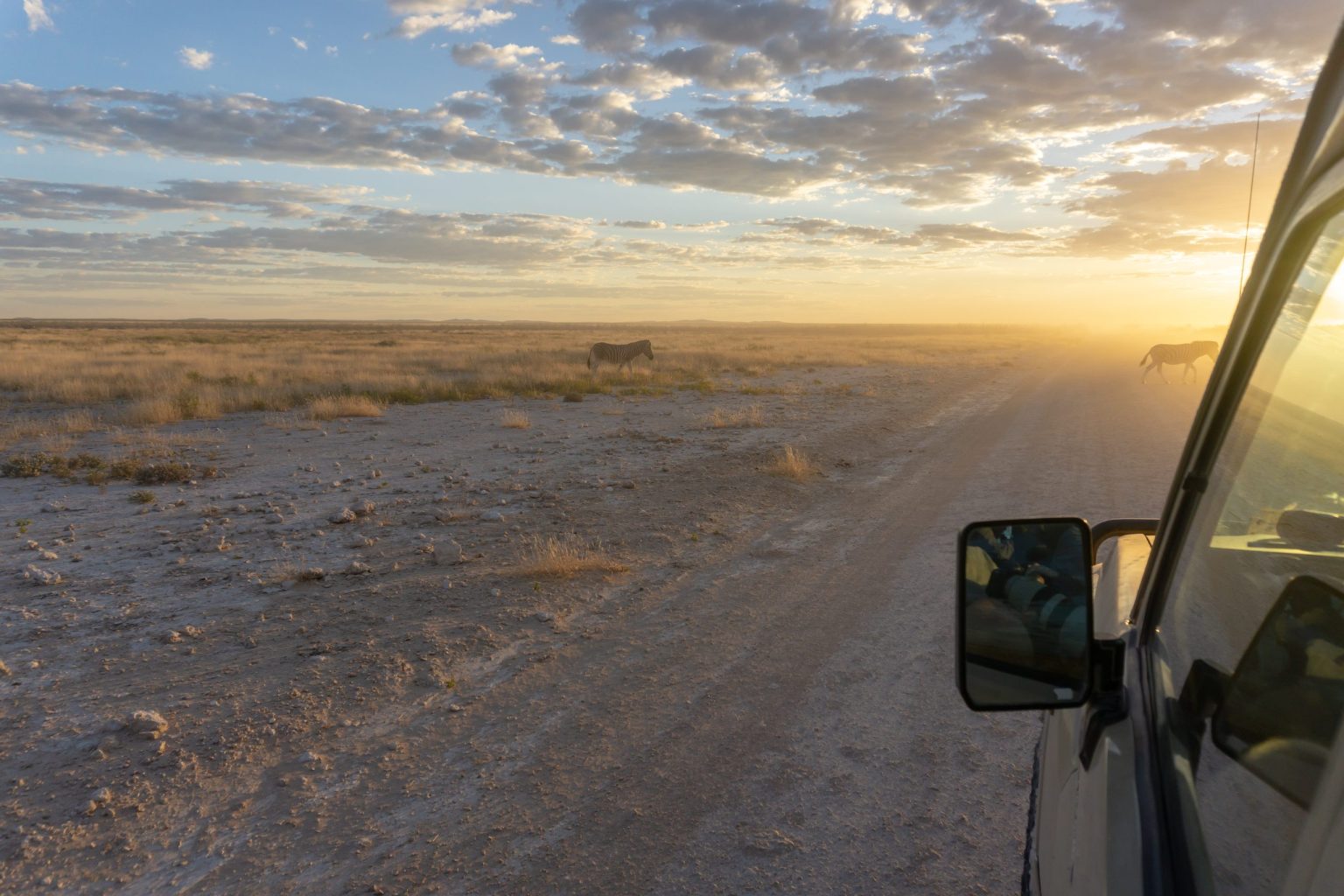
No tour bus. No fixed window seat. Just a 4×4, a road disappearing into the landscape and the possibility of wildlife around the next corner.
Self-drive safari: why Africa is made for a road trip
The journey changes when you’re driving
There is a significant difference between looking out of a vehicle and being responsible for where it goes next.
On a self-drive safari, the road becomes part of the experience.
You watch the surface ahead. Read the landscape. Keep an eye on the fuel gauge. Decide whether to stop or continue.
And occasionally you stop because something much larger than your vehicle has decided to occupy the road.
This isn’t simply a safari without a guide.
It’s a road trip through one of the most extraordinary environments in which it’s possible to drive.
Freedom feels different out here
The attraction of self-drive travel has always been independence.
Leave when you’re ready. Stop when something catches your attention. Spend longer somewhere because you like it.
In Africa, those simple freedoms can feel amplified.
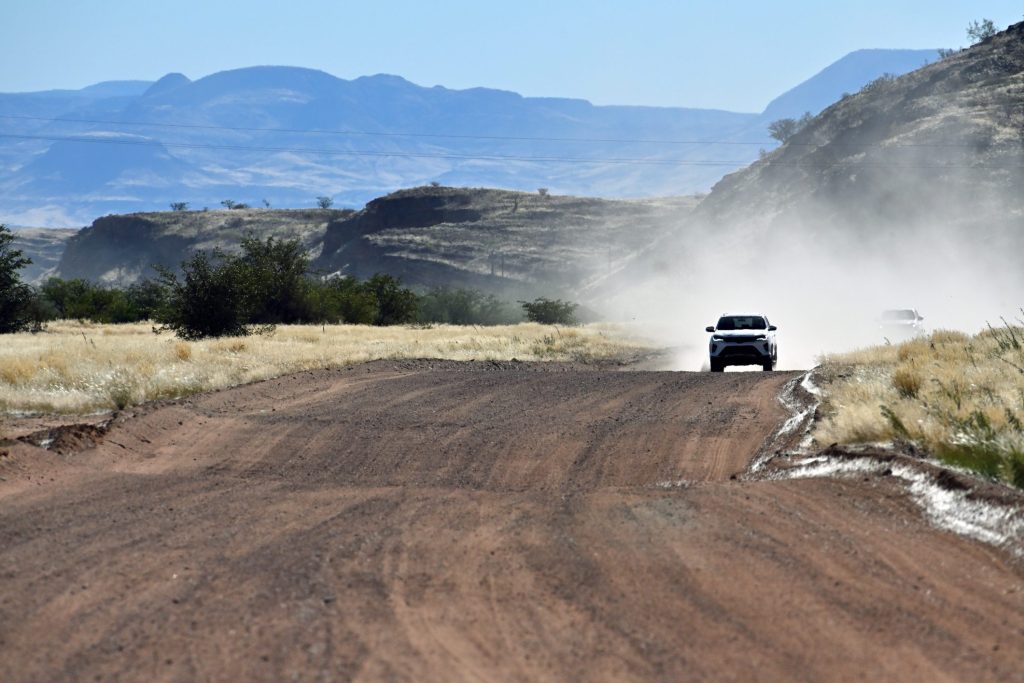
A journey might link national parks, remote camps, desert landscapes and small towns over hundreds or thousands of kilometres. The road between them isn’t dead time.
It’s where much of the adventure happens.
The landscape changes gradually because you’re travelling through it rather than flying over it.
Distances start to make sense.
And arriving somewhere remote feels considerably more satisfying when you got yourself there.
You don’t need to ship your own Defender to Africa
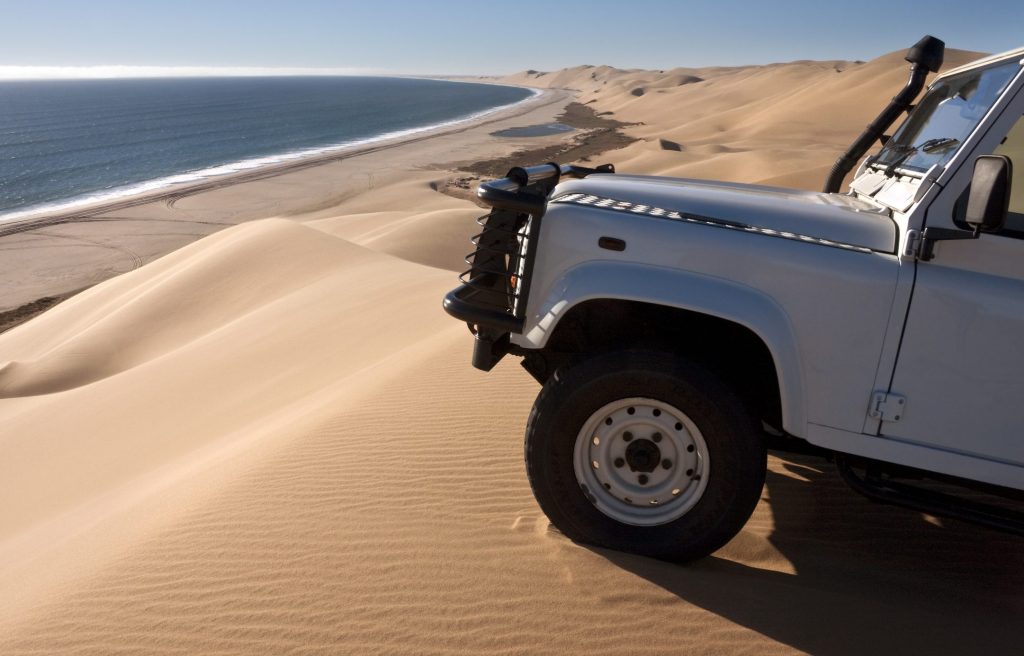
For most travellers, a self-drive safari begins with a locally supplied vehicle.
Depending on the journey, that could mean a conventional 4×4 or something considerably more expedition-focused, potentially carrying camping equipment, recovery equipment, additional fuel or water and everything required for travelling through remote areas.
Some journeys use lodges throughout. Others combine accommodation with rooftop tents or wilderness camps.
There are also fully supported expeditions where you remain behind the wheel but travel with guides or support vehicles.
That’s why the phrase self-drive safari covers a surprisingly broad range of experiences.
The important question isn’t simply can I drive myself?
It’s how independently do I want to travel?
The wildlife changes the rules
On most road trips, spotting something interesting beside the road means finding somewhere safe to stop.
On safari, what you’ve spotted may itself determine whether you can continue.
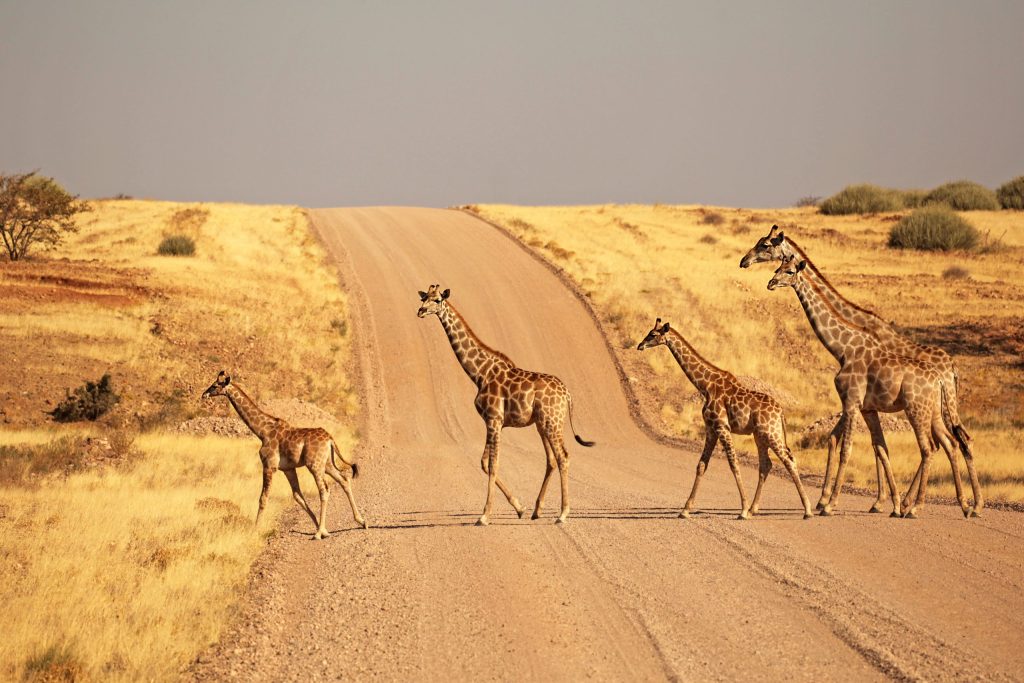
Wild animals are exactly that: wild.
Rules vary between parks, reserves and destinations, and instructions from operators, rangers and local authorities always take precedence.
Remain in the vehicle where required. Keep appropriate distances. Don’t block an animal’s route and never treat getting a photograph as justification for getting closer.
Part of the pleasure is learning to slow down and observe.
Sometimes the best decision is simply to switch the engine off and wait.
Navigation is part of the adventure
There is something wonderfully old-fashioned about travelling through a huge landscape towards a distant overnight stop.
But romantic ideas about getting lost are considerably less appealing when daylight is disappearing and the lodge is still hours away.
Good preparation matters.
Understand how navigation is provided and whether it works offline. Know the day’s distance, likely road conditions and expected driving time. Establish where fuel is available and whether opening hours can be relied upon.
In some areas, a relatively modest distance can take far longer than expected.
Gravel, sand, water crossings, wildlife, weather and simply stopping to look at things all influence progress.
This is not the place to judge a day’s difficulty solely by the number of miles.
The vehicle becomes home
Spend enough days travelling through remote country and an interesting thing happens.
You become attached to the 4×4.
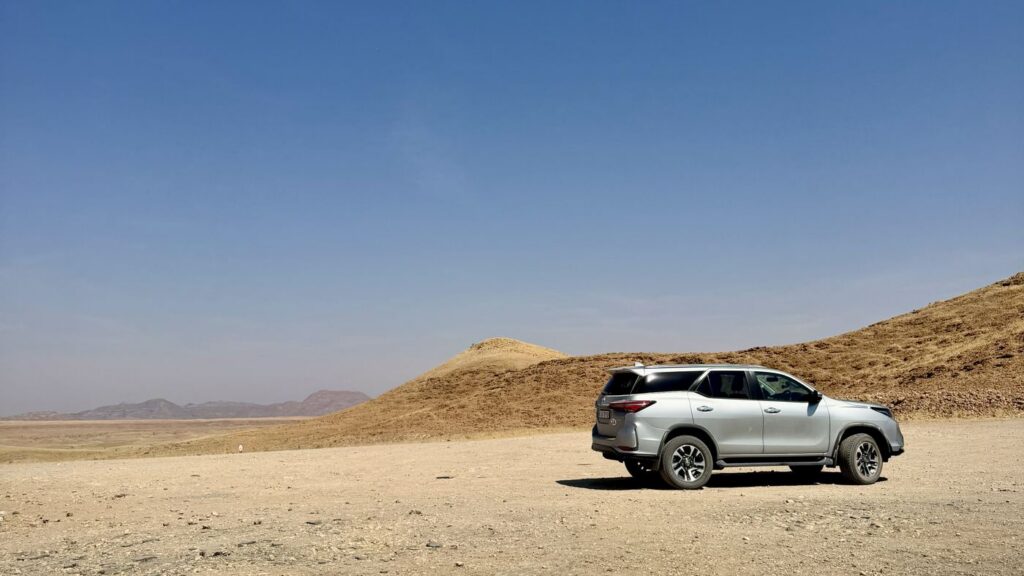
You learn where everything lives. Develop a loading routine. Know which noise is normal. Become disproportionately pleased when you see it waiting outside in the morning.
If you’re camping, the relationship becomes stronger still.
The vehicle carries your bedroom, kitchen, water, luggage and route into the wilderness.
It’s no longer something you’re using to reach the holiday.
It is part of the holiday.
Nights matter as much as days
Then the engine stops.
That might mean arriving at a beautiful safari lodge, watching the light disappear across a waterhole or setting up camp beneath a sky with very little artificial light competing with it.
This is one reason an African road journey can feel so complete.
Driving provides the momentum during the day.
The overnight stops make you slow down again.
A great itinerary needs both.
How adventurous do you want it?
Self-drive safari doesn’t have to mean tackling the most remote tracks on the continent.
There are journeys suitable for travellers taking their first steps into independent African travel and others designed for experienced overland drivers.
Ask sensible questions.
What surfaces will you encounter? Is previous 4×4 experience expected? Is training provided? Are you travelling completely independently or alongside others? What communications and emergency support are available? What happens if the vehicle has a problem?
Most importantly, choose a journey appropriate to your experience rather than the one that produces the most dramatic photograph.
Adventure is considerably more enjoyable when you’re properly prepared for it.
Africa rewards the journey
A conventional safari can take you somewhere remarkable.
A self-drive safari adds something else.
Responsibility.
You’re no longer simply being shown the landscape. You’re navigating through it, making decisions within it and gradually understanding the distances between the places on the map.
The destination still matters.
But so does every dusty kilometre required to reach it.
Explore self-drive safari and African overland journeys on Stradora.
Keep reading.

A French icon. On home roads.
Kevin McCloud takes the iconic Citroën DS home to France for a classic car road trip along the French Riviera…

The case for taking the long way: why the Grand Tour is back
Great roads, memorable stops and time to enjoy everything between them. Why the journey deserves as much attention as the…

The road trip starts before you leave: preparing your car for Europe
A little preparation leaves more room to enjoy the drive. Get your car and your plans ready for the roads…